
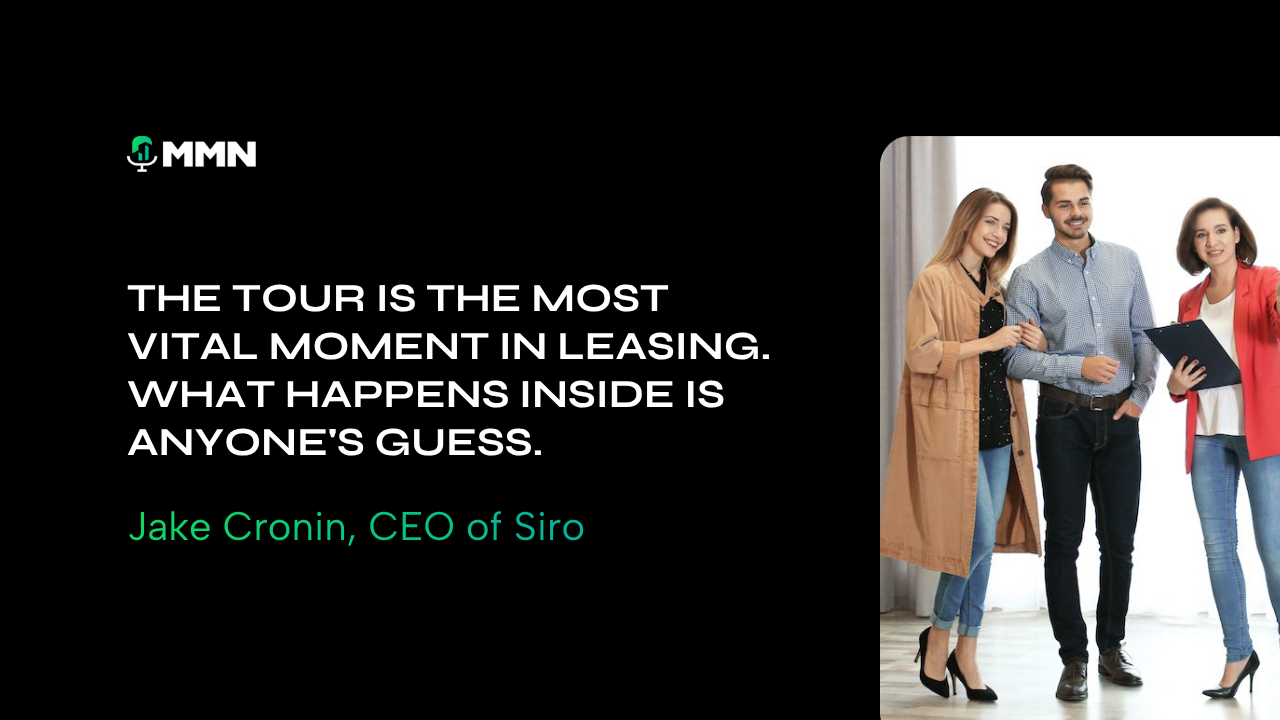
The Tour is the Most Vital Moment in Leasing. What Happens Inside is Anyone's Guess.

Every upstream dollar spent on marketing, leads, and nurture is meant to get a prospect to take a tour, but what happens in that conversation remains the industry's most expensive blind spot.
Tour-to-lease conversion is one of the most closely watched metrics in multifamily. Many operators can recite their conversion rate, but what almost none of them can tell you is what is actually happening inside the conversations that produce it.


That conversation, the leasing tour, is multifamily's Zero Moment of Truth. The moment a prospect who has already done the research, already shortlisted your property and already shown up, decides yes or no. 


It’s the highest-intent moment in the entire funnel. And for most operators, it’s still a black box.


The funnel has a blind spot.

The top of the leasing funnel is one of the most-watched stretches in real estate. Every impression, click, and lead source is tracked. CRMs capture the handoff, nurture sequences handle follow-up, and AI scores leads before a leasing consultant ever enters the picture.


But when the prospect walks through the door, the data stops.


Consider two properties in the same market. Similar pricing, comparable amenities, steady tour volume. One leases consistently, but the other lags. On paper, they should behave the same. In practice, they don't. And without any visibility into what's actually happening during tours, the explanation stays frustratingly vague, because there's no way to validate it.

What objections surfaced? What competing properties came up? What almost closed the deal, and what quietly killed it? These are answerable questions, but until recently, there hasn't been a reliable way to expose the truth.


In a recent episode of the MultifamilyCollective podcast, Jake Cronin, CEO of Siro, described it this way: "That stage is the black box. You've done all this marketing. Finally, you have someone in the door, and then you take your foot off the gas. Fingers crossed. Hope this goes well. I don't know what's going on in there."


Any operator who's been around long enough knows it immediately — and knows exactly how uncomfortable that is.


The market changed. The blind spot didn’t.

For years, that discomfort was manageable. In a hot market, where rents climbed and demand outpaced supply, conversion inefficiency was a problem you could grow through. Losses from underperforming tours were real, but they were just noise against a backdrop of rising rents and consistent demand.

That window has closed. Vacancy crept up, rent growth stalled, and in markets flooded with new supply, the tailwinds operators counted on for a decade just went quiet. Now, competing on fundamentals means accounting for every inefficiency in the funnel, including the one the industry has never had a clean way to see.


As Cronin described it on the podcast: "Improving your tour-to-lease conversion is one of the few levers that you've got to improve your yield. You can't just keep increasing the price. The rest of those levers are going to fail this year."

It's not that operators haven't wanted visibility into what happens during the tour; the data just wasn't there to capture it. Until recently, the actual technology capable of getting inside that conversation, turning unstructured dialogue into something operators could actually learn from and act on, simply didn't exist.


The richest data in leasing is already in the room.

Operators have always known that what happens in those tour conversations matters. The mystery shops, the post-tour debriefs, the CRM notes — the industry kept reaching for this data, but with tools that just never came close. 


What's inside those conversations is exactly what operators have spent decades trying to piece together from the outside. Prospects reveal other communities they're considering. They signal whether the price is a real constraint or a reflex objection. They tell you, not in a survey but in the middle of an actual decision, what they value, what builds trust, and what quietly kills a deal. 


Those same conversations contain the answers to questions that get decided in boardrooms and on blueprints: which amenities are worth building, which floor plans prospects actually want, whether the concessions you’re offering are moving decisions or just eroding margin. 


Cronin put the stakes plainly: "a couple of mystery shops a year, a couple of anecdotes, to make these massive multi-million dollar decisions." That's not a process failure — it's what the industry was working with.


Now the tour can talk back.

Conversational AI has matured to the point where it can find patterns across hundreds of leasing conversations that no debrief or mystery shop could surface.


Which objections cluster at a specific property? Where do conversations typically break down? What are high-converting leasing consultants doing differently in the first five minutes that everyone else doesn't?


That's exactly where Siro is changing the game. It records, transcribes, and analyzes every tour at scale — turning conversations that used to disappear as soon as they ended into something operators can actually learn from. The platform runs in the background — no new workflows, no extra steps for the leasing team. 


For leasing consultants, that means coaching grounded in evidence, not instinct — real feedback on real conversations that accelerates development in ways generic training never could. For leadership and ops, it means clean data across the portfolio: what's driving performance gaps, where to focus, what prospects are actually responding to across assets. And for the executives making capital decisions, it means something the industry has never had — a direct line from what prospects say on tours to what gets built, priced, and invested in next. 


The tour stops being something operators have to trust, and becomes something they can actually understand. 


The last mile. 

In logistics, the last mile is the final leg of delivery — the hardest, most expensive, and most consistently underinvested part of the operation. Everything before it gets optimized. The last mile resists it. And that's where most of the cost, and most of the failure, actually lives. The leasing tour is multifamily's last mile.


Every upstream investment — the marketing spend, the ILS placement, the lead nurture, the CRM workflow — exists to get a prospect to that moment. And then the moment itself gets handed off to chance, to inconsistency, to whatever happened to go well or poorly that afternoon.


Operators who change that won't just improve their conversion numbers. They'll understand their customers in ways their competitors don't: what drives decisions, what creates hesitation, what actually builds enough trust to get a lease signed. 


In a market where the easy wins are gone, and every basis point of NOI has to be earned, that's more than a process improvement. It’s the whole point. 


----


Jake Cronin goes deeper on all of it in his conversation with Mike Brewer: what operators are getting wrong, what the data actually shows, and what changes when the black box finally opens. Listen on the MultifamilyCollective podcast.


Featured in this episode: Jake Cronin, CEO of Siro

Siro is an AI platform that records, transcribes, and analyzes in-person leasing conversations — giving multifamily operators visibility into what actually happens on every tour. Leasing teams close more leases. Managers coach with evidence. Ops gets clean data across the portfolio. Learn more at siro.ai


Recent Posts
April 18, 2026
Written by: Janet Rosseth We just wrapped a three-part mini-series on the Optimized podcast focused on one of the most talked-about (and often misunderstood) topics in multifamily: The Resident Experience. Three conversations. Three completely different approaches. And one very clear takeaway: There is no single playbook. But there are patterns. Across creativity, training, and data, the communities getting this right are thinking differently about how the experience is built, delivered, and measured. Let’s break it down. 1. Experience Starts with Emotion Guest: Melania Armenta | Gallery Residential Melania shared how Gallery Residential is redefining resident engagement through their Artist in Residence program . This isn’t about adding more events to the calendar. It’s about creating culture inside the community. Instead of relying on traditional engagement tactics, they’re bringing in local artists, chefs, and creators to shape experiences that feel personal, memorable, and connected to the neighborhood. And it works. Residents participate, not just attend Communities develop a distinct identity Renewal rates and referrals increase Because when people feel something, they stay. 2. Experience is Delivered by People Guest: Lisa Moore | GoldOller Lisa brought it back to something foundational: Everyone owns the resident experience. At GoldOller, that mindset shows up in how they onboard, train, and support their teams from day one. This isn’t just employee development for the sake of growth. It’s directly tied to how residents experience the brand. Structured onboarding creates consistency Ongoing training builds confidence Clear ownership improves every interaction They also strike the balance so many teams are chasing right now: Tech-enabled, human-driven. Technology supports the experience. But people deliver it. 3. Experience is Proven Through Data Guest: Anne Baum | Towne Properties Anne tackled the question most teams struggle to answer: How do you actually measure the resident experience? Her answer: You stop treating it as a feeling—and start tying it to performance. From first impression to renewal, her team tracks the full journey: Online engagement and conversion metrics Google ratings and reputation trends Move-in satisfaction and NPS Renewal rates and likelihood to recommend Then they use that data to make real changes. Messaging shifts. Operational fixes. Better alignment between expectation and reality. And the results follow. The Through Line These three leaders are solving for the same thing from different angles: Melania builds emotional connection Lisa builds team alignment Anne builds measurable accountability Together, they highlight something we see every day in our work: The resident experience isn’t a program. It’s a system. And that system only works when: The brand promise is clear The team is aligned to deliver it And the data is used to refine it Where to Start If you’re looking at your own communities and wondering where to focus, don’t overcomplicate it. Start here: Add one experience that feels different, not just more Audit how your team is trained to deliver that experience Identify 3–4 metrics that actually reflect what residents are feeling Then build from there. Because progress in the resident experience doesn’t come from one big move. It comes from small, intentional improvements across the entire journey. The Cadence POV The resident experience isn’t one initiative sitting in operations, marketing, or training. It lives in the hand-offs. Between brand and reality. Between tech and human. Between expectation and delivery. What we saw across all three conversations is this: Emotion creates connection People deliver consistency Data drives improvement Miss one, and the experience breaks. Align all three, and you don’t just improve satisfaction. You build something that performs. That’s where marketing becomes a true business driver. Not just attracting residents, but shaping the experience that keeps them.
By Jennifer Carter April 15, 2026
The Shift Happening Right Now
By Jennifer Carter March 23, 2026
If you've visited the Multifamily Media Network website recently, you may have noticed things look a little different around here. A new logo. A refreshed color palette. An updated site that makes it easy to find the shows, hosts, and conversations you're looking for. This was a full brand and website redesign, and we're pretty excited to share what went into it: Why Now? MMN has grown a lot. More podcasts, more hosts, more industry voices joining the conversation. We needed a digital home that matched the scale of what MMN had become — and a partner who understood how to build it. Who We Worked With We brought in Repli , a proptech company that specializes in building websites for the multifamily industry, whether for boutique apartment operators or property management companies with large-scale portfolios. From December 2025 through March 2026, the Repli team worked closely with MMN's VP of Marketing & Sales, Jennifer Carter, to take the network's mission and translate it into something you could see, navigate, and feel. Building a Brand Identity From the Ground Up The first phase was identity. Repli developed a complete visual system for MMN — new logo, color palette, typography, and design elements flexible enough to live across the website, social media, and promotional materials without losing their cohesion. The brief was simple: it needed to feel like a media network. Bold, modern, and reflective of the energy behind MMN's programming and the community it serves. To keep that consistency as MMN continues to grow, Repli also built out comprehensive brand guidelines and templates — so every future show launch, event promotion, or partnership announcement looks and feels like MMN. A Website Built Around Multifamily Conversations The bigger shift happened on the website itself. Rather than organizing the site around static pages of information, the new experience is built around discovery — the way audiences naturally move through media. You can jump from a podcast page to a host profile, follow that host to other shows they contribute to, and navigate back through written content connected to the same topics. Everything flows. Nothing feels like a dead end. A few things worth highlighting: Every podcast page now includes direct listening links to Spotify, Apple Music, and YouTube — so you can tune in from wherever you already are. Host profiles spotlight the people behind the conversations and connect directly to every piece of content they've contributed to. Category filters across both podcasts and blog articles let you find content relevant to what you care about most. Streamlined contact forms also make it easier than ever for potential guests and partners to reach out and get involved. Behind the scenes, the site is built on Repli's MultiHub platform – an all-in-one marketing hub that gives the MMN team the ability to add content, highlight new shows, and keep the site up to date without needing a developer on standby every time something changes. SEO and AI optimization tools are also built in, helping MMN reach a wider audience across the industry. Want to See the Full Story Behind the Build? More than anything, this rebrand gives MMN a foundation that can grow while positioning it as the central hub for multifamily media and the industry voices shaping what comes next. Want to go deeper on what this project actually involved? Repli put together a full case study walking through every phase of the project and the thinking behind it all.
Show More