
The Podcast Isn’t the Win. It’s What Happens After
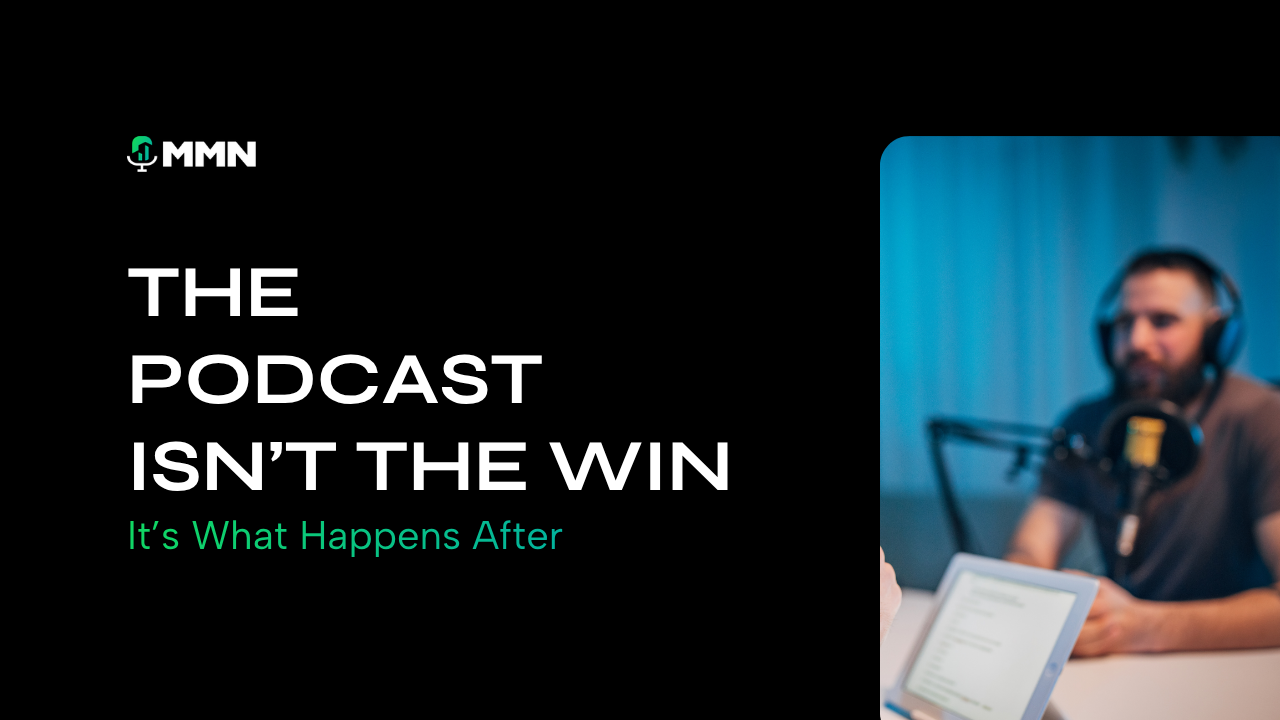
Multifamily has embraced the podcast.
Vendors want in. Operators are listening. The industry, in many ways, has found a new front door for ideas. And it's one that feels more human than a whitepaper and more credible than a cold email. A conversation on a show within Multifamily Media Network doesn’t just reach an audience; it places you inside the dialogue shaping how the industry thinks.
That part is working. What isn’t working is what happens next. Most companies still treat a podcast appearance like a finish line. They record the episode. Share the link. Post a clip. Then move on to the next initiative. The conversation ends where it should have started.
The misunderstanding is subtle, but it matters.
A podcast is not a piece of content. It’s a moment of credibility.
It signals that you have something to say and that your perspective is worth airing in a space where others are paying attention. In a market where executives are constantly filtering noise, that signal carries weight.
But only if it’s used. The companies that get value from these moments don’t think in terms of content at all.
They think in terms of continuation.
Because inside every meaningful conversation are the ideas that actually travel—observations that feel true, tensions that feel familiar, perspectives that reframe something people thought they already understood.
Not the product. Not the pitch.
The thinking:
Procurement in multifamily is still treated like a process, not a strategy.
That line doesn’t sell anything. It opens something. And that’s the difference. Where most outreach starts with a request, this approach starts with relevance.
Instead of asking for time, it offers context:
We recently had a conversation around how PMCs are rethinking vendor management—thought this might be relevant given what you’re seeing.
No urgency. No pressure. No pitch. Just a reason to engage.
In a space where executives are conditioned to expect the opposite, that alone creates separation. Internally, the shift is just as important. When a podcast becomes part of how a team communicates and not just something marketing publishes, it changes the language of the organization.
It shows up in follow-ups. In re-engagement. In the moments where credibility is either built or lost.
“We were just talking about this in a recent industry conversation…”
It’s a small line. But it carries context.
It tells the person on the other end that this idea isn’t being introduced—it’s already in motion.
There’s a tendency to overcorrect here. To take one conversation and stretch it into as many posts, clips, and assets as possible. To chase volume in the name of visibility.
But volume has never been the advantage in multifamily. Perspective is. A few clear ideas will travel further than a dozen attempts to say the same thing louder.
What gets lost most often isn’t effort. It’s intention.
The podcast gets recorded. The deliverables get checked off. And then the asset—the actual conversation—gets left behind. Unused. Unapplied. Unextended. And with it, the opportunity to turn one moment into many. Because that’s what this really is. Not exposure. Leverage.
A single, well-framed conversation has the potential to become a dozen meaningful touchpoints with the right people, in the right context, at the right time.
But only if it’s treated that way. The podcast isn’t the outcome. It’s the starting point.
And in a market where everyone is trying to get in front of the same executives, the advantage doesn’t come from saying more. It comes from saying something that’s already worth continuing.
Recent Posts