

Innovation Themes That Dominated RETCON 2025: A Post-Conference Analysis
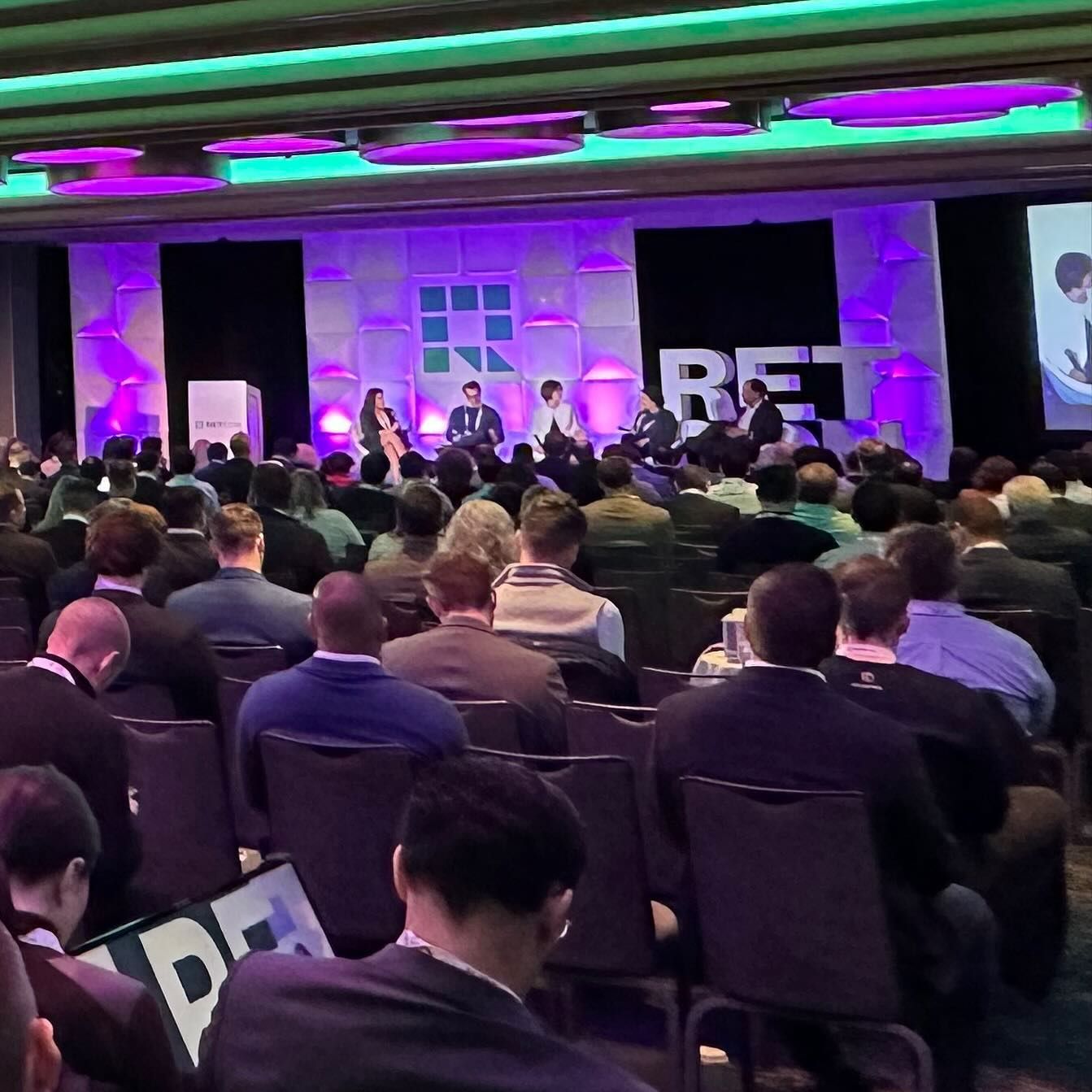
Panel discussion at a conference: speakers on stage, audience in seats, purple and green lighting.

After attending this year's RETCON conference last week in Las Vegas, it's clear that the real estate industry is undergoing a profound transformation. As I navigated the sessions and engaged in countless conversations between presentations, several key innovation themes emerged that will shape the future of real estate across all sectors. Here's my analysis of what really mattered at this year's premier real estate innovation event.

Cross-Asset Innovation: Breaking Down Silos

The most striking observation from RETCON 2025 was the dissolution of traditional boundaries between real estate asset classes. Throughout the conference, speakers and attendees regularly referenced solutions that originated in one sector being adapted for others.

Major institutional investors and property managers shared examples of technologies that are successfully crossing traditional asset class boundaries. We saw demonstrations of predictive maintenance systems from industrial properties being applied to multifamily, hospitality-inspired resident experience platforms showing promising results in apartment communities, and retail customer analytics finding new applications in residential leasing.

This cross-pollination was everywhere at the conference. The message was clear: innovation excellence now transcends traditional real estate categories, and companies that maintain rigid sector-specific approaches risk missing transformative opportunities.

PropTech 3.0: The End of "Optional" Technology

If there was one consensus among the attendees at RETCON, it was that property technology has definitively moved from competitive advantage to table stakes. Session after session reinforced how we've progressed from PropTech 1.0 (basic digitization) through PropTech 2.0 (connected systems) into what many industry leaders termed "PropTech 3.0"—where technology is fully integrated into the core value proposition of real estate assets.

This maturation was evident in discussions where major players shared their internal approaches to technology valuation. Multiple speakers confirmed they now include technology infrastructure assessments in their acquisition due diligence, with some acknowledging they had passed on otherwise attractive deals due to inadequate technology implementation that would require significant capital expenditure to remediate.

For multifamily operators, the implications are profound: technology is no longer just an operational consideration—it's fundamentally intertwined with asset value.

The Simplification Imperative: Streamlining the Technology Experience

A dominant theme throughout RETCON 2025 was the growing demand for simplified user experiences in property technology. Industry leaders repeatedly emphasized how today's workforce and residents expect the same intuitive interfaces they experience with consumer technologies like Amazon and Domino's Pizza in their property management systems.

Numerous conversations centered around the fatigue caused by complex, outdated interfaces that require extensive training and reduce adoption. Technology providers showcased new approaches focusing on streamlined experiences that require minimal training and maximize user adoption.

This shift reflects a broader recognition that the industry has accumulated too many heavy, disconnected systems that frustrate users and create inefficiencies rather than solving them. The emphasis has shifted from feature proliferation to thoughtful design that prioritizes the most common use cases and makes them effortless to execute.

The Amazon/Domino's Pizza analogy came up repeatedly—the idea that users should be able to complete complex processes with just a few taps, with the technology handling all the complexity behind a simple interface. For multifamily operators, this trend represents both a challenge to existing systems and an opportunity to significantly improve staff productivity through more intuitive tools.

New Capital Partnerships: Evolving Funding Models

The financial architecture supporting real estate innovation showed significant evolution at RETCON 2025. Beyond traditional venture capital, the conference highlighted alternative funding approaches gaining traction.

Corporate venture arms from established real estate companies now account for a significant and growing portion of PropTech funding. These strategic investors bring not just capital but also industry expertise and pilot opportunities that pure financial investors can't match.

Particularly interesting were discussions around emerging partnership models, where technology providers shared examples of accepting equity in development projects in lieu of traditional fees, aligning their incentives directly with property performance rather than just software licensing.

Multiple conversations also touched on how public-private partnerships are blending municipal resources with private capital to address affordable housing challenges through technology-enabled approaches.

For multifamily operators, these evolving capital structures create opportunities to access technology through more flexible arrangements beyond traditional vendor relationships—potentially reducing upfront costs while creating more aligned long-term partnerships.

Ecosystem Collaboration: The Power of Together

The structure of RETCON 2025 itself reinforced the conference's most important theme: the necessity of collaboration across the entire real estate ecosystem. Unlike more siloed industry events, this year's programming brought together diverse stakeholders in productive discussions.

The results were evident in both formal sessions and hallway conversations, where the most productive discussions featured diverse participants: developers articulating specific challenges, technology providers proposing solutions, and capital partners outlining funding criteria—all in the same conversation.

For the multifamily sector, this collaborative mindset represents both an opportunity and a challenge: operators accustomed to vendor-style relationships must adapt to more partnership-oriented approaches, while gaining the benefit of solutions built specifically for their needs rather than adapted after the fact.

Looking Ahead: What RETCON 2025 Means for Multifamily

As I reflect on my experience at RETCON 2025, several implications emerge specifically for multifamily operators:

  1. Integration will triumph over point solutions. The most successful operators at the conference have moved beyond the "app for everything" approach toward unified platforms that share data seamlessly.
  2. Resident experience has become quantifiable. Discussions presented more sophisticated approaches for measuring and valuing resident experience, moving this previously subjective factor into the realm of financial analysis.
  3. Operational efficiency and resident experience are no longer at odds. The false dichotomy between these priorities has dissolved, with the most compelling innovations demonstrating how technology can simultaneously improve operations while enhancing resident experiences.
  4. Data has become a strategic asset. Leading operators are now treating operational and resident data as a proprietary advantage, with significant attention devoted to extracting actionable insights from previously underutilized information.
  5. Simplicity is winning over complexity. The operators gaining the most traction are those providing Amazon-like simplicity in their technology interfaces, making complex processes feel effortless for both staff and residents.


The energy and attendance at RETCON 2025 confirmed that despite economic headwinds, innovation remains a central priority for the real estate industry. For multifamily operators specifically, the conference highlighted both the risks of technological complacency and the rewards awaiting those who embrace thoughtful innovation.

As the industry returns to implementation in the real world, the true test will be translating the inspiring conversations of RETCON into tangible results for properties, staff, and residents in the months ahead.


This article was produced by Multifamily Media Network as part of our coverage of RETCON 2025. For more insights from the conference and ongoing analysis of emerging trends in real estate innovation, visit multifamilymedia.net.

Recent Posts

Dark graphic with the text
By Justin Dilley February 10, 2026
AI in Multifamily: Artificial intelligence is no longer a distant concept. It’s here: transforming all industries, including multifamily real estate. At the recent RETCON conference, the panel "AI Strategies in Multifamily: How to Ride the Wave" explored AI’s real-world impact on leasing, accounts receivable, and customer service. Moderated by Rich Hughes , SVP AI Strategy & Innovation at RealPage , the discussion featured insights from Kyle Nelson ( Snappt ), Anil Singh ( Veritas Investments ), and Nicole Jones ( Veris Residential ). ‍ AI is streamlining critical business functions, automating time-consuming tasks, and enhancing operational efficiency. In accounts receivable, it speeds up payment cycles by automating invoice management. In customer service, chatbots and virtual assistants provide instant responses, reducing resolution times and improving satisfaction. AI also accelerates leasing and tenant screening, processing vast amounts of data in seconds and improving credential verification, allowing teams to focus on high-value interactions. ‍ Beyond automation, AI is reshaping the customer journey. Prospects now receive rapid, consistent responses, eliminating long wait times and frustrations. AI-driven personalization tailors interactions, making engagements more relevant, while automated leasing reduces errors and speeds up approvals for a seamless move-in experience. Meanwhile, AI’s ability to analyze massive datasets is a game-changer for decision-making. From fraud detection to predictive analytics, AI identifies inefficiencies, detects patterns, and provides real-time insights that optimize workflows and business strategies. ‍ As AI adoption accelerates, companies must strike a balance between automation and human interaction. While AI enhances efficiency, human judgment remains essential for complex decision-making, emotional intelligence, and relationship-building. Ensuring AI aligns with a company’s brand identity is equally as important: figuring out how to strike the balance of leveraging AI for efficiency, while preserving the human touch. The panel collectively emphasized that the most successful AI strategies start small, with incremental deployments that demonstrate quick wins and build confidence. The importance of training AI models to maintain authentic, on-brand messaging was often highlighted. ‍ Looking ahead, AI’s role in multifamily will only deepen. AI agents will soon manage more complex tasks like lease negotiations and financial transactions. Specialized AI solutions tailored to industry needs will continue to emerge, and advancements in computer vision and robotics will reduce the need for physical site visits, making property evaluations faster and more cost-effective. ‍ "AI is now embedded in the fabric of everything we do. With that, we need to think about it as an efficiency mechanism that drives business outcomes. If we start thinking about it as a category, we lose sight of the problems we were trying to solve in the first place." - Kyle Nelson, VP of Corporate Strategy ‍ AI is no longer just about automation, it is now a strategic asset that has the power to redefine entire business models. But success depends on thoughtful integration and human oversight. Companies that harness AI to enhance efficiency while preserving the human touch will not only keep pace with innovation but will shape the future of the industry. As the RETCON panelists made clear, the AI revolution in multifamily is just beginning.
Woman smiling, title:
By Janet Rosseth February 10, 2026
The RETCON 2025 Conference was recently held in Las Vegas, and it’s clear that our industry is standing at the intersection of rapid innovation and the need to double down on human connection. Here’s a look at the top takeaways and trends that multifamily leaders are focusing on right now: 1. Blending Tech and Humanity It’s not about choosing between technology and people — it’s about making them work in harmony. Tech should simplify processes and free up time for your team to focus on what matters most: resident relationships. 2. Centralization is Gaining Momentum Companies are streamlining operations by centralizing admin tasks, leasing support, and even maintenance troubleshooting. The result? On-site teams can focus on delivering an elevated resident experience and becoming community leaders rather than being buried under admin tasks. 3. Change Management is Non-Negotiable Technology rollouts require careful planning and communication. Piloting programs, explaining the "why," and involving on-site teams from the start are key to successful adoption. 4. Data + Curiosity = Smarter Decisions Operators are relying heavily on data, but they also recognize the power of curiosity. Listening to frontline teams and continuously asking questions ensures decisions are both informed and people-focused. 5. AI: The Ultimate Assistant (Not a Replacement) AI is streamlining everything from lead qualification to maintenance requests. But everyone agrees: human handoffs need to be seamless. Done right, AI is your team’s best assistant — not their competitor. 6. Hospitality is the Future of Multifamily Your community isn’t just a property; it’s an experience. From concierge-style services to activated amenity spaces, the industry is taking cues from hotels and hospitality brands. 7. Speed is Everything Leads don’t wait — 45% of opportunities disappear if not responded to within four hours. Two-hour response times are the new norm. CRMs with built-in AI are no longer a luxury. 8. Build a Flexible Tech Stack APIs and integrations are key. One-size-fits-all solutions won’t cut it anymore. Operators are building customized tech ecosystems designed to evolve with their business. 9. Urban Markets Are Watching Closely Urban cores are beginning to show signs of resurgence, but there’s still caution in the air. Creativity will be key to navigating the urban-suburban balance in the coming years. 10. Foster a Culture of Curiosity Curiosity leads change. Companies that encourage learning, experimentation, and open dialogue will be best positioned to lead.  In Summary The biggest lesson from RETCON 2025? Success in multifamily comes down to balancing innovation with human connection. Thriving in this next chapter will require investment in technology and a shift in hiring strategy to highly trained tech administrators, and skilled customer service teams to master the tech hand-off. Stay curious. Stay connected. And most importantly, stay human.
Title slide:
By Eric Tall February 10, 2026
The real estate market, particularly in the multifamily and build-to-rent (BTR) sectors, is undergoing a recalibration—not a retreat. A recurring message at this year's industry gathering was clear: fundamentals are back in focus. Quick flips and speculative upside have given way to strategic patience, with seasoned players emphasizing time-tested strategies over trend-chasing. ‍ Despite macro uncertainty, the BTR sector continues to hold long-term promise. The term “missing middle” surfaced repeatedly, reflecting the growing recognition of a structural housing gap between traditional multifamily rentals and single-family home ownership. BTR, increasingly seen as a permanent asset class rather than a transitional one, offers a compelling solution. These developments aren't just a sign of optimism—they're a signal that the sector is maturing. ‍ DR Horton , the most active seller in the current cycle, has leaned heavily into forward BTR transactions. Their strategy is volume-driven, a function of public-market accountability rather than a harbinger of distress. They’re not running from BTR—they’re monetizing what they’ve built and cycling capital efficiently. That’s a nuance many investors miss. Their activity does not reflect weakening market fundamentals but a corporate imperative to show lot sales volume. ‍ Capital markets remain in price discovery mode. Inventory for sale is light, and both buyers and sellers appear willing to hold their breath a little longer. Deals are getting smaller—not because opportunity is shrinking, but because developers are moving down the ladder in deal size and unit count to stay active without outsized risk. This is survival through adaptation, not contraction. ‍ Financing, however, may be the most dynamic piece of the puzzle. A notable number of lenders from the single-family world are showing up with creative structures, often tailor-made for sponsors in the BTR space. The blurring of asset class lines here is both tactical and opportunistic. Lenders are recalibrating as much as developers are. ‍ For operators, hold periods are being reconsidered—hard stop. Three years isn’t a strategy; it’s a hope. The smartest capital is extending horizon expectations to 5, 7, even 10 years. That’s where stable returns and operational efficiencies emerge, especially as BTR management remains an evolving capability. No one’s cracked the code on managing these assets at scale yet—but whoever does will define the next generation of BTR returns. ‍ Lastly, geographic diversification is being approached with caution. Instead of seeking the next “hot” market, investors are retrenching into places where they have the deepest insight and networks. Comfort and context are trumping speculation. ‍ This isn’t a pause—it’s a reset. And it may be the healthiest signal the BTR market could send. ‍ RECAP from IMN Build to Rent Conference 
Show More